Why I'm a neoliberal
My political philosophy and why I identify with neoliberalism - emphasizing evidence-based policy, market mechanisms, and a strong social safety net.
I’m competing in the Neoliberal Twitter account’s annual bracket competition, which gives me an opportunity to explain my commitment to neoliberal ideology. I position neoliberalism as a pragmatic, evidence-based approach to solving pressing policy challenges through market mechanisms and strategic government intervention.
What is neoliberalism?
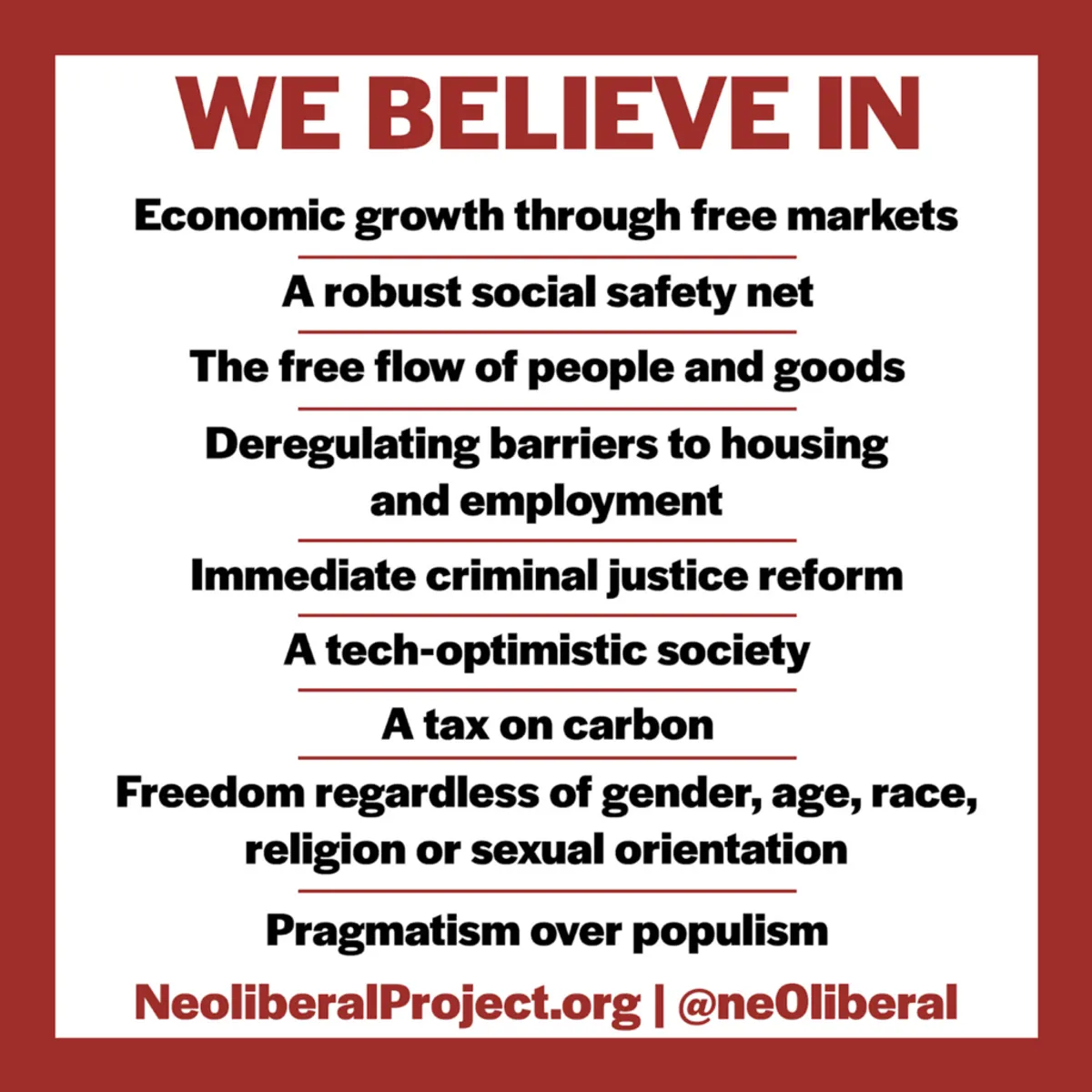
Neoliberalism has been mischaracterized as selfish or warmongering. Instead, it’s rooted in liberal values, emphasizing evidence-based policymaking and practical solutions. Key tenets include deregulation of housing and labor markets, carbon pricing, immigration, globalization, and a robust social safety net.
Housing deregulation (YIMBYism)
I advocate for legalizing apartment construction, particularly dense infill housing near jobs and transit. Overregulated land use restricts freedom of movement, impedes economic growth, and harms the environment.
My activism includes:
- Joining YIMBY advocacy in San Francisco (2016)
- Campaigning for YIMBY pioneer Sonja Trauss’s supervisor campaign (2018)
- Co-founding YIMBY Neoliberal organization (2018)
- Creating Ventura County YIMBY (2019), which gained over 1,500 followers
Carbon pricing
Carbon taxation is the key ingredient for cutting carbon emissions. The IPCC identifies carbon pricing as crucial for cost-effective climate mitigation, and studies worldwide demonstrate its effectiveness.
Carbon pricing enjoys broad support: average net favorability across 18 polls since 2015 reached +33 percentage points. Most developed nations price carbon; the U.S. and Australia remain exceptions.
My contributions:
- Joined Citizens’ Climate Lobby (2018)
- Led my local chapter and became California state coordinator
- Researched carbon dividends professionally
- Co-founded “Save the Gas Tax” campaign (2022) with 15 environmental organizations
Social safety net
Economic growth alone cannot guarantee minimum living standards for non-workers or address perverse incentives in current welfare systems. I advocate for:
- Universal child allowances
- Cash assistance over in-kind benefits
- Universal basic income (UBI) as the logical endpoint
I founded the UBI Center, conducting quantitative policy analysis, and co-founded PolicyEngine, a nonprofit technology platform enabling citizens to understand tax and benefit policy impacts. Means-testing creates administrative bloat and extreme marginal tax rates for low-income households.
Conclusion
I’m an “extreme liberal” seeking the most effective policy solutions: address poverty through direct cash transfers, housing affordability through legalization rather than government management, and pollution through market-based pricing mechanisms. These neoliberal policies are transformative when combined.